New: Occupancy Insights.
Daily headcount, attendance trends, and RTO reports for your office.

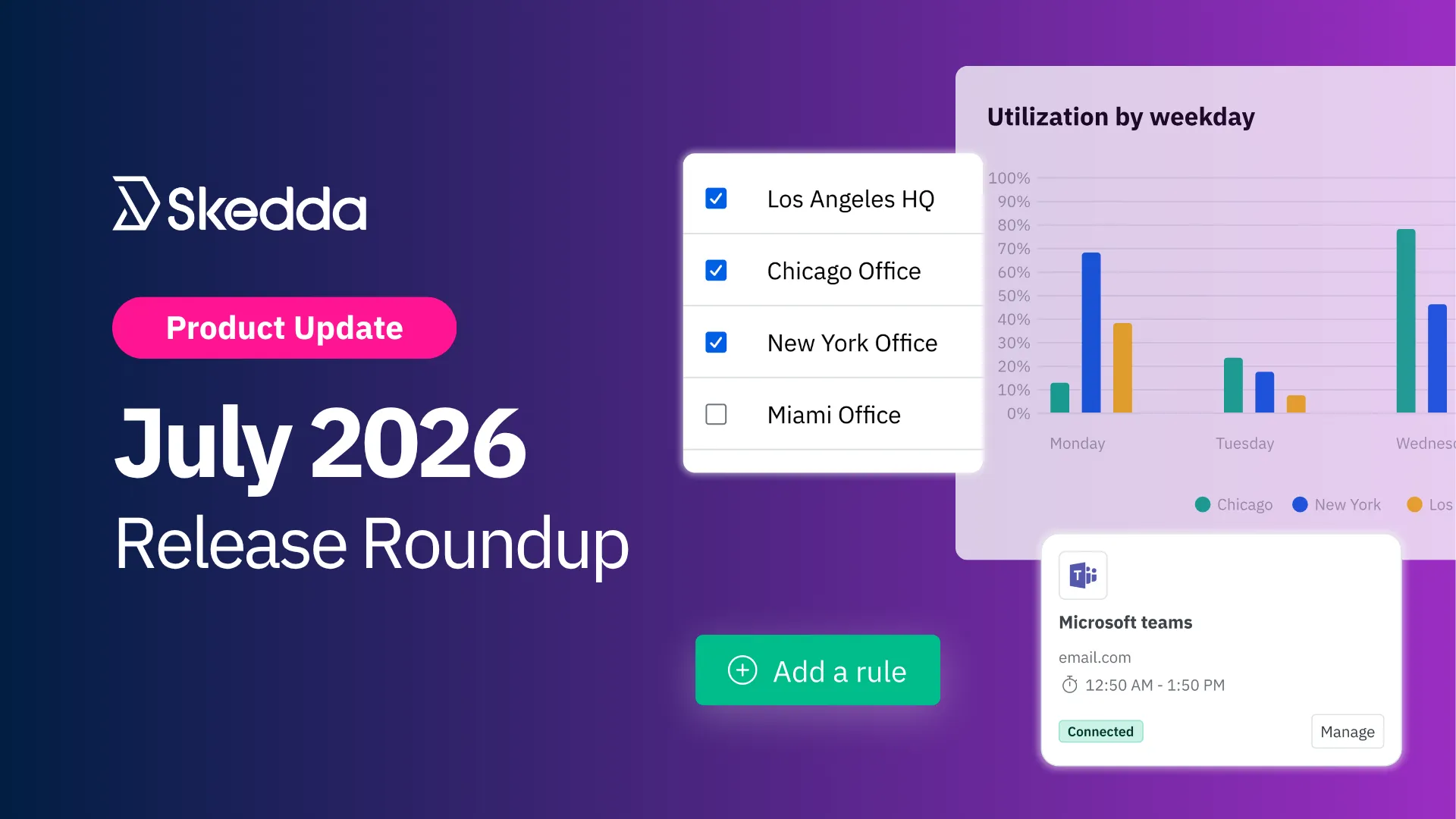
Five releases this month giving you more control over the finer details of your workplace.
Summer in Boston is in full swing, and work is the last thing on people's minds (especially for our lucky customers outside of the US soaking up longer vacations). Our product team didn't get the memo, though. We used a typically quiet month to ship several important releases that had been sitting in the queue for a while.
Most of what admins need isn't a new capability. It's a sharper version of a capability they already have: a booking window that opens on the hour instead of the day an approval rule that only kicks in on Wednesdays, or a dashboard that shows every venue at once instead of one at a time. This month's releases are about giving you that level of precision, wherever you need it.
Here's what's new:

If you run more than one office location in Skedda, getting the full picture of how your organization is doing has meant opening dashboard after dashboard, one venue at a time, and doing the comparison yourself.
The new Organization Hub brings insights for every location into a single view. Access it from the venue switcher in the left sidebar. Select any combination of venues and instantly see:
Organizations are set up by Skedda, usually during onboarding. If yours isn't set up yet, or you need a venue added or access changed, just reach out to your Account Manager or Skedda support.
Read the Organization Hub help guide for full details.
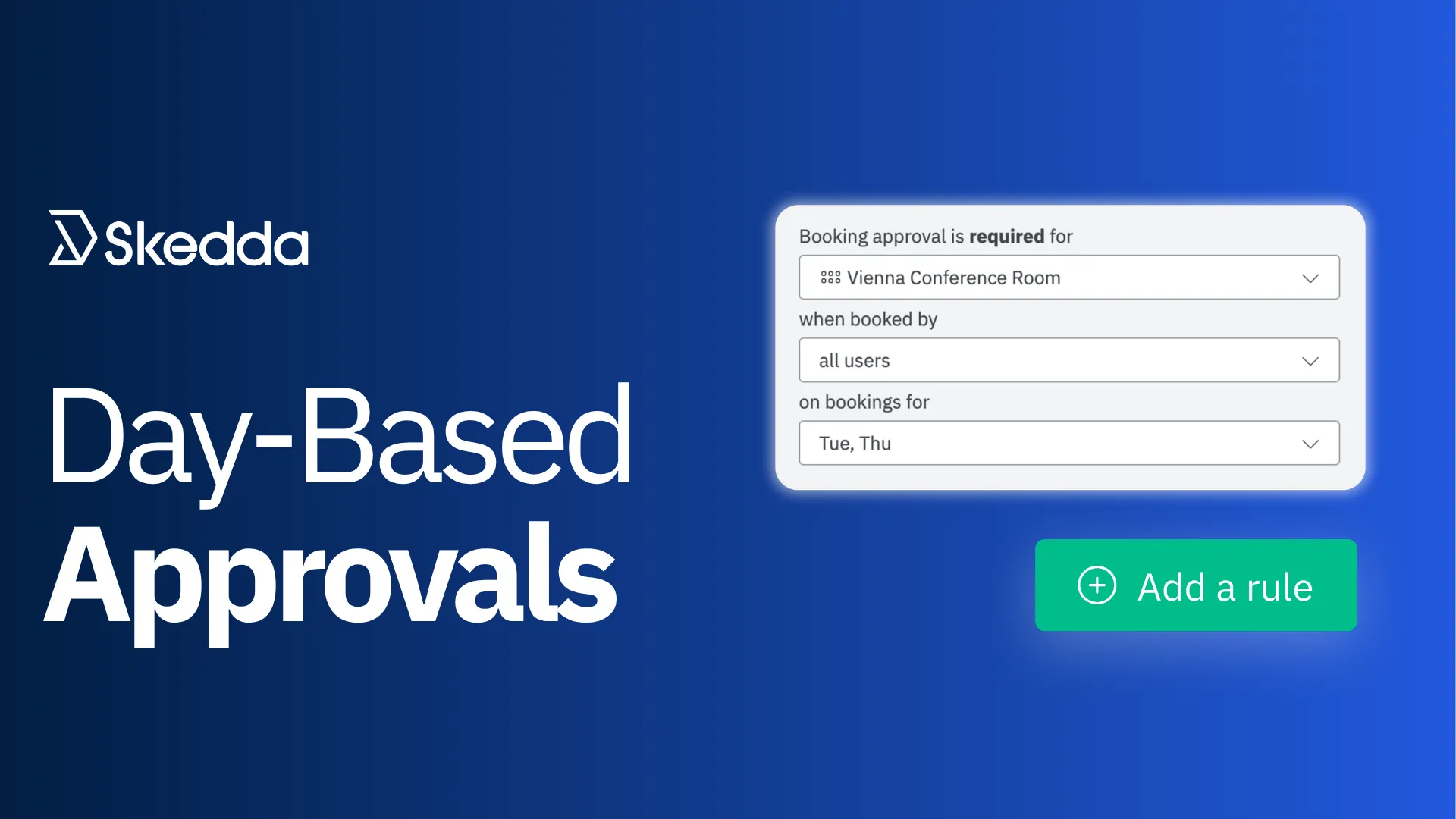
Booking approval rules have always applied to every day equally. For venues that only need review on their busiest days, that meant either approving requests every single day or turning approvals off entirely and losing the control.
Booking approval rules can now be scoped to specific days of the week. Head to your approval rule settings and select the days and spaces you want the rule to apply to.
Read the Booking Requests & Approvals help guide for a refresher.
Our Visitor Management system keeps getting better every month, and this release is a good example of why.
Exporting visit data used to mean choosing between a manageable file and a complete one. Custom field data for multi-person visits could push exports past what a single spreadsheet row could reasonably hold.
You can now export visitor data in two formats, both available under the Export dropdown on the Visits page:
Both formats respect whatever filters you've already applied, and export as XLSX or CSV.
Handling frequent visitor check-ins? Skedda's Visitor Management is built for exactly that. Book a demo for more details.
Booking window rules have supported day-based advance notice for a while. But “1 day ahead” isn't always precise enough, especially for spaces that turn over multiple times in a single day.
When creating a “more than” booking window rule, you can now choose hours ahead as an alternative to the existing day-based options. That gives you exact, hour-based precision on advance-notice requirements, instead of being limited to whole-day increments.
Every connected tool, Zoom, Webex, Teams, Google and Outlook calendar sync, and more, now lives on its own dedicated page instead of being tucked inside your venue’s Settings page. As Skedda's integration list keeps growing, this gives admins a clearer, easier way to see what's connected and manage it.
This month was a fun one for our product team: a batch of small improvements that add up to something bigger. Taken together, they give admins precision to match how their organization actually runs, whether that's a single venue, a portfolio of them, a specific day of the week, or a specific hour of the day.
We're already more than halfway through the summer of 2026, crazy right? Still more releases to come though, stay tuned.
Our team is ready and waiting to talk through your specific desk scheduling requirements and see how Skedda could work for you.

.svg)